Tjayasetimu
“Mummies were real people with real lives. They are not monsters. They are not ghosts. They are the preserved bodies of Egyptian people who lived thousands of years ago. People who laughed, sang, hung out with their families and looked after their pet cats. People like us, in many ways.”
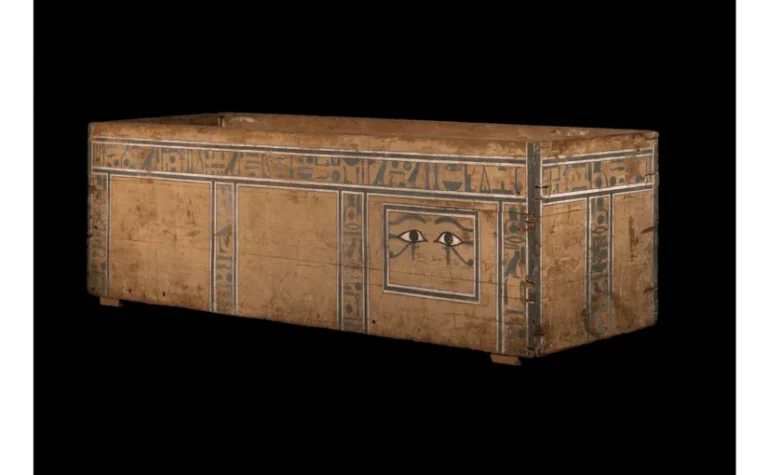
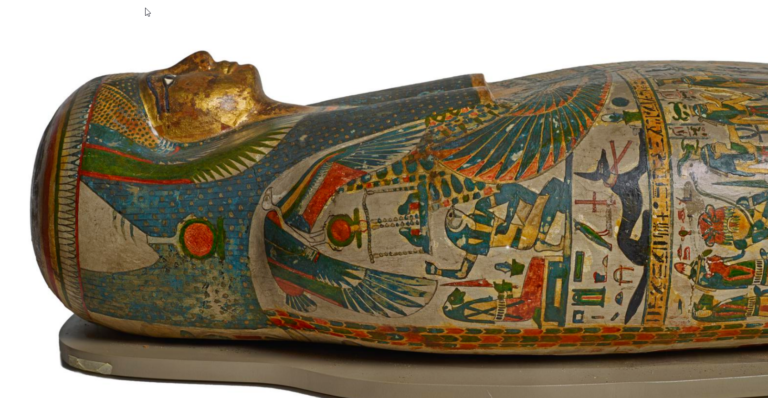
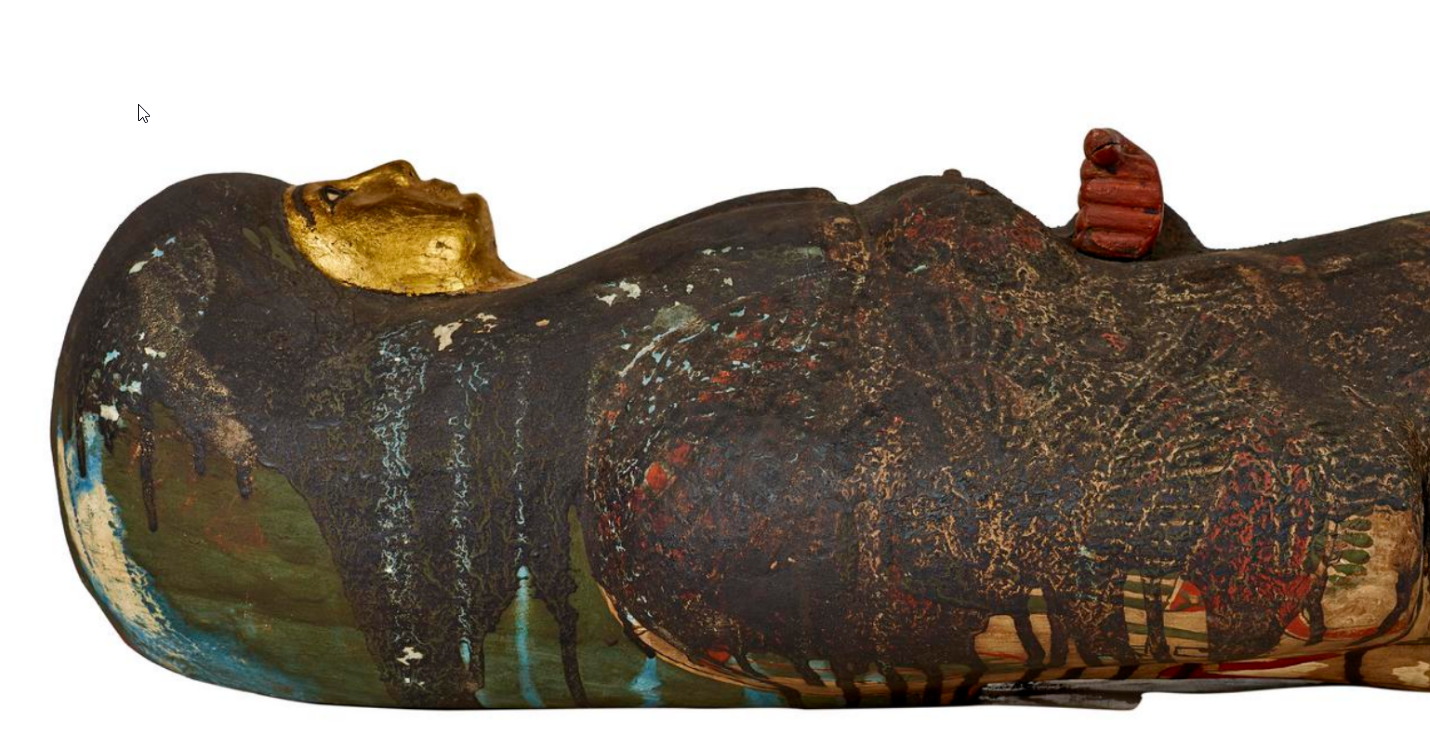
Here is one of the mummies currently in the British Museum. The varnish on the case turned black over time, but the museum has cleaned the black coating off the case’s face and hands, and also cleaned a strip down the front to reveal the mummy’s name: Tjayasetimu.
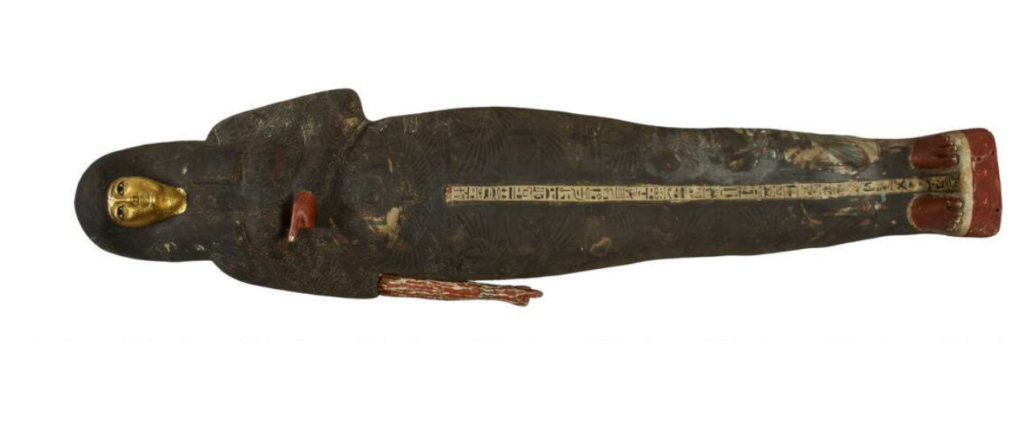
Although the case is adult-sized, the occupant is a little girl no more than eight or nine years old. She lived more than three thousand years ago and she was a singer in the royal choir.
Tjayasetimu used to sing in a beautiful temple beside the river Nile. When she died, her parents paid for her body to be mummified. They thought that if they preserved her body carefully, she would be able to use it in the afterlife. The embalming priests removed her organs and packed her body with a special kind of salt to dry it out. Then they filled the body with sand and sawdust and wrapped it in painted bandages.
In Victorian times, people opened mummy cases and unwrapped the mummies inside, often as an act of public theatre. These pre-YouTube unboxing extravaganzas may have been exciting, but they were also ghoulish and tasteless, as well as completely destroying the mummy.
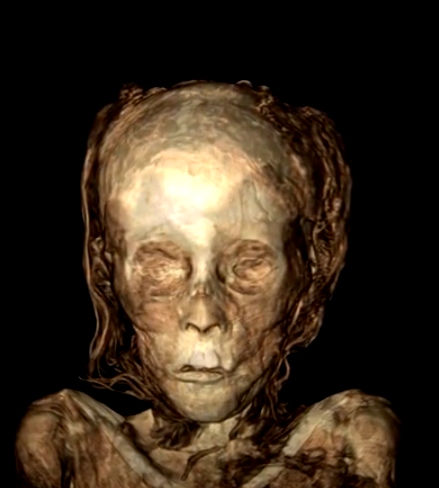
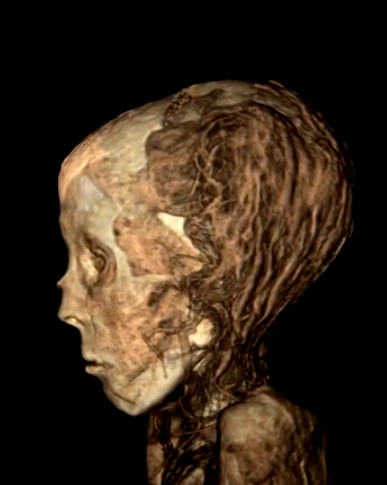
The curators at the British Museum have not opened Tjayasetimu’s mummy case. Instead they took the case to a hospital and put it in a powerful scanning machine. This way, we can see Tjayasetimu without disturbing her.
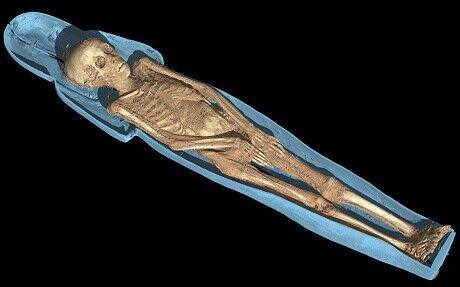
Her face has delicate lips, a pointy chin and shoulder-length hair. Some of her adult teeth were coming through, but not many.
Children hardly ever got into the royal choir, which means that Tjayasetimu must have had a truly angelic voice. She was a genuine child star.
Read more about Tjayasetimu here on the British Museum’s website.