How to make a papier-mâché Ancient Egyptian coffin
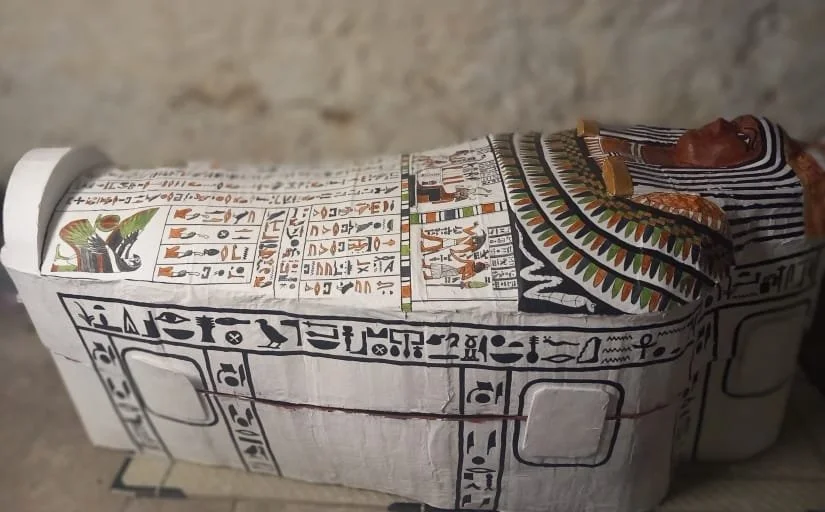
For a fun project over the summer, I had a go at making an ancient Egyptian coffin out of cardboard and papier-mâché. I know papier-mâché isn’t the most relaxing of classroom activities but when I do it at home with an audiobook playing in the background, I find it extremely therapeutic. Maybe a project of this size is feasible in Year 3 or Year 4 if a group of fifteen or so children team up and spread the work across several afternoons.
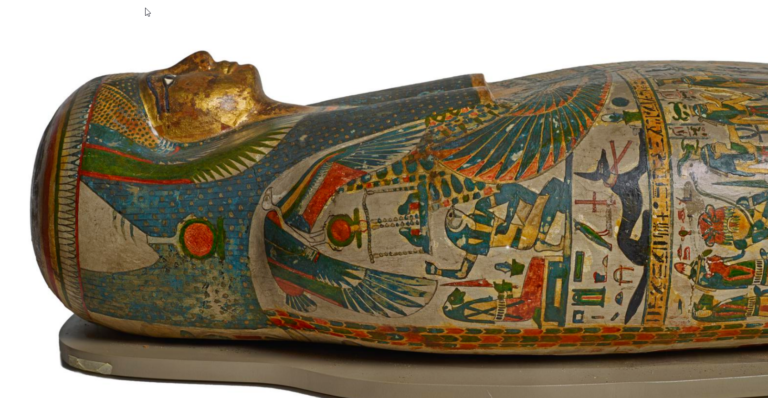
I based the design on the coffin of Pensenhor in the British Museum and used instructions from Andy Seed’s excellent blog post I Want My Mummy.
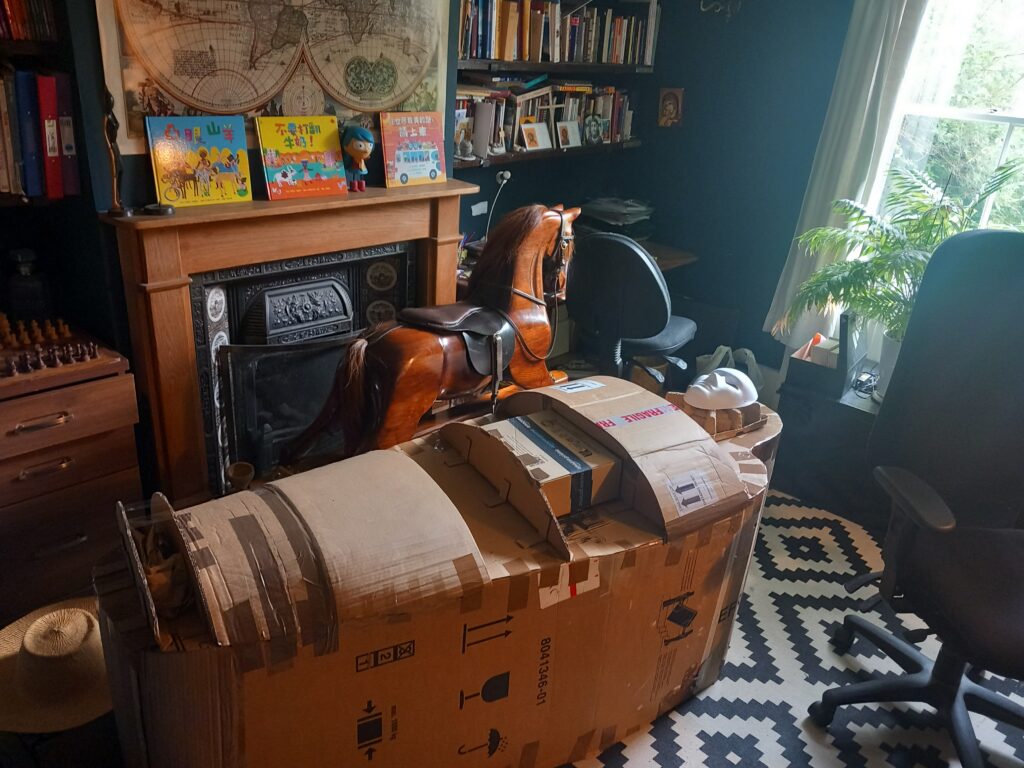
You can get free fridge-freezer-sized cardboard boxes from any white goods company – the ones I approached were glad to be shot of them. I used a roll of packing tape to assemble the cardboard ‘carcass’ of the coffin, and cut out eight curved panels on top to provide the shape of the body. As for the face, you can buy a paper mask from Hobbycraft or similar.
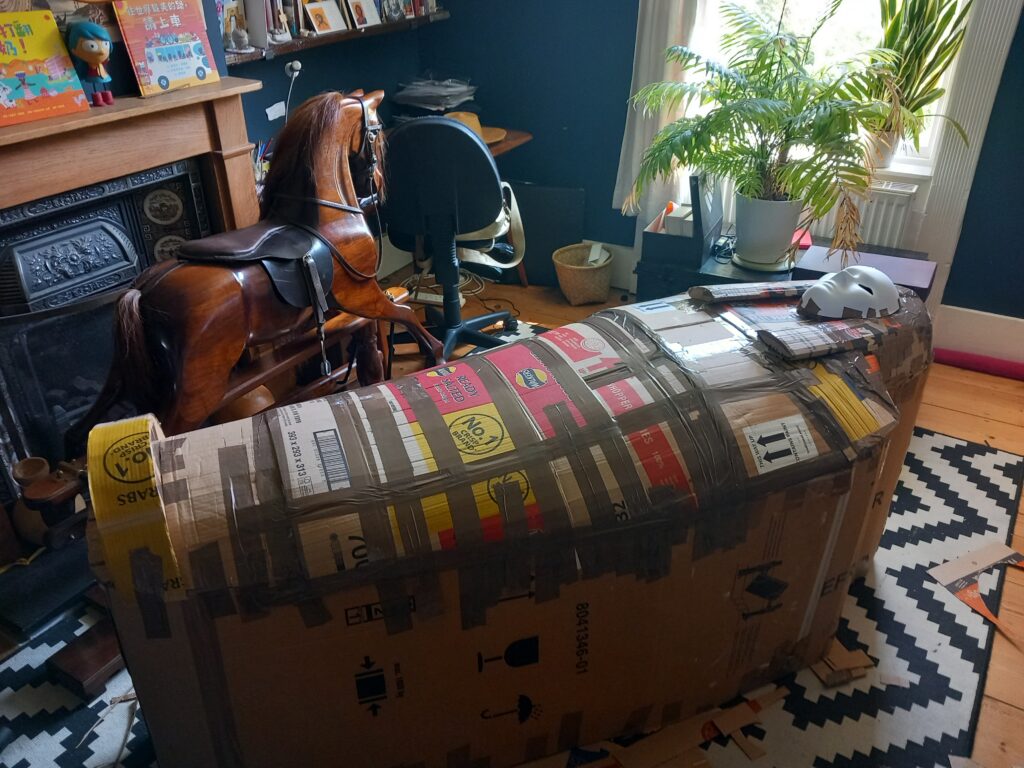
I messed up here – the cardboard hair-piece should curve up over the brow instead of sitting flat. Otherwise I was pleased with the coffin’s shape.
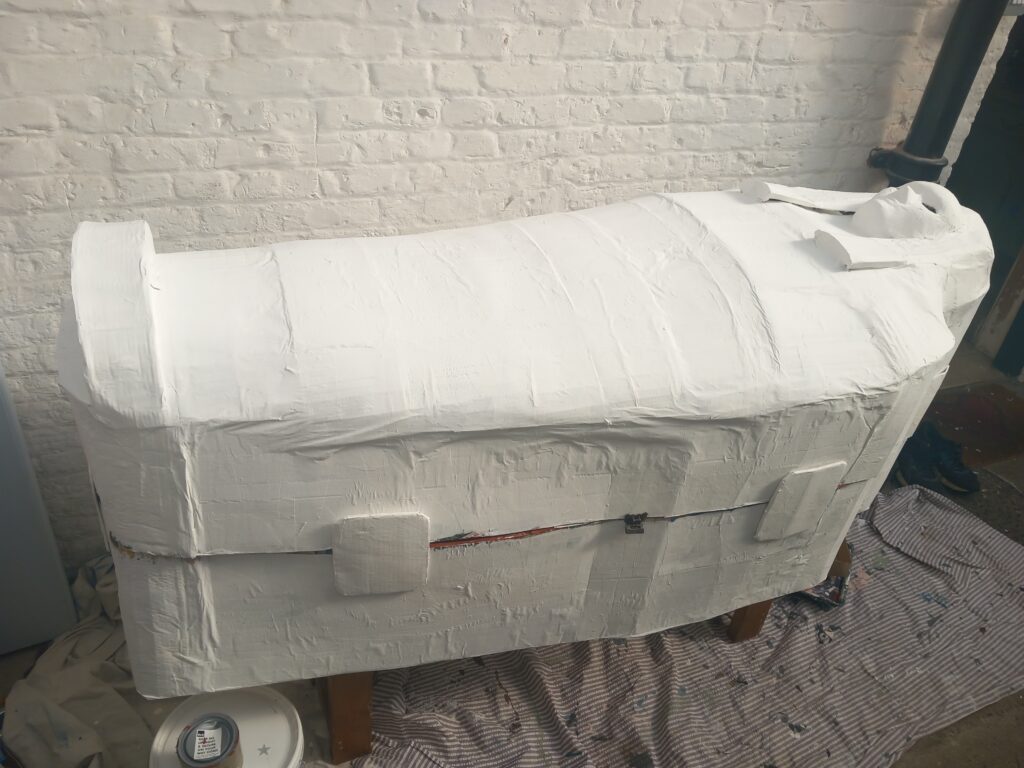
Two layers of papier-mâché followed by two coats of white emulsion. Once it was dry, I slit it horizontally with a craft knife to divide the coffin into top and bottom sections. Because the two halves were originally one piece, they fit together perfectly.

Use Posca pens or similar to draw rectangular panels for the artwork and hieroglyphs.

I used acrylic paints (Shuttle Art vintage paints) for the picture panels and hieroglyphs. A limited palette is probably best. I stuck to dark blue, sage green and ‘Mars’ orange, to imitate the real coffin of Pensenhor.

Finally, I added two coats of Polyvine ‘clear satin’ varnish, for protection. I wish I had chosen a flat varnish – the face in particular has ended up too shiny.
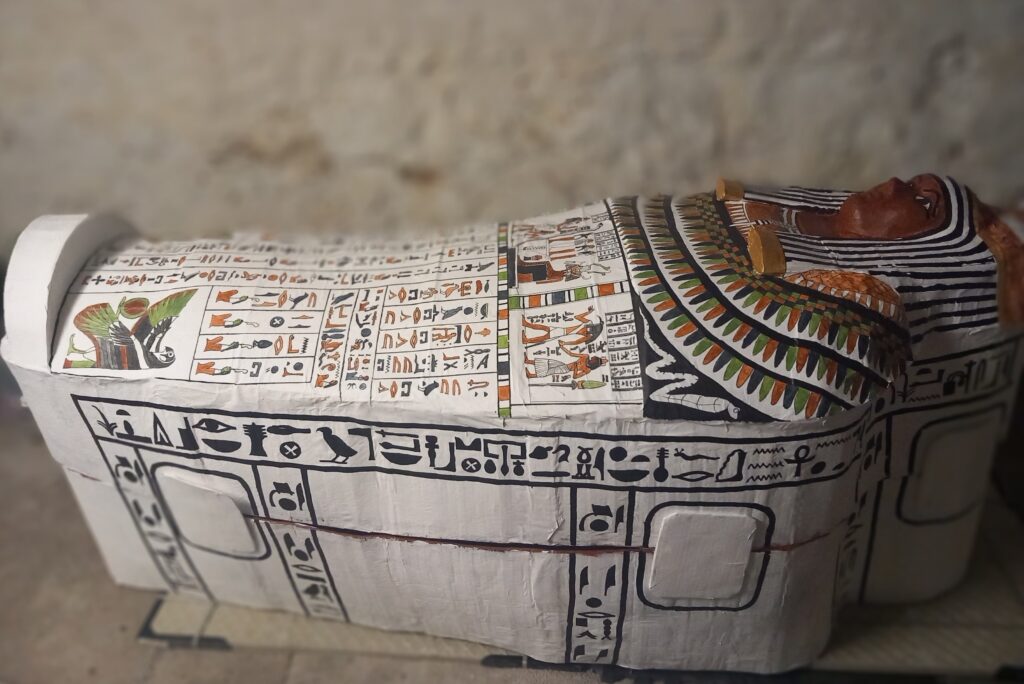
I’m using the finished coffin as a prop for an escape room and as a visual aid for online Egypt-themed author visits. Book me for an author visit through Authors Abroad to meet Pensenhor for yourself and to enjoy a special Night in the Museum writing workshop.