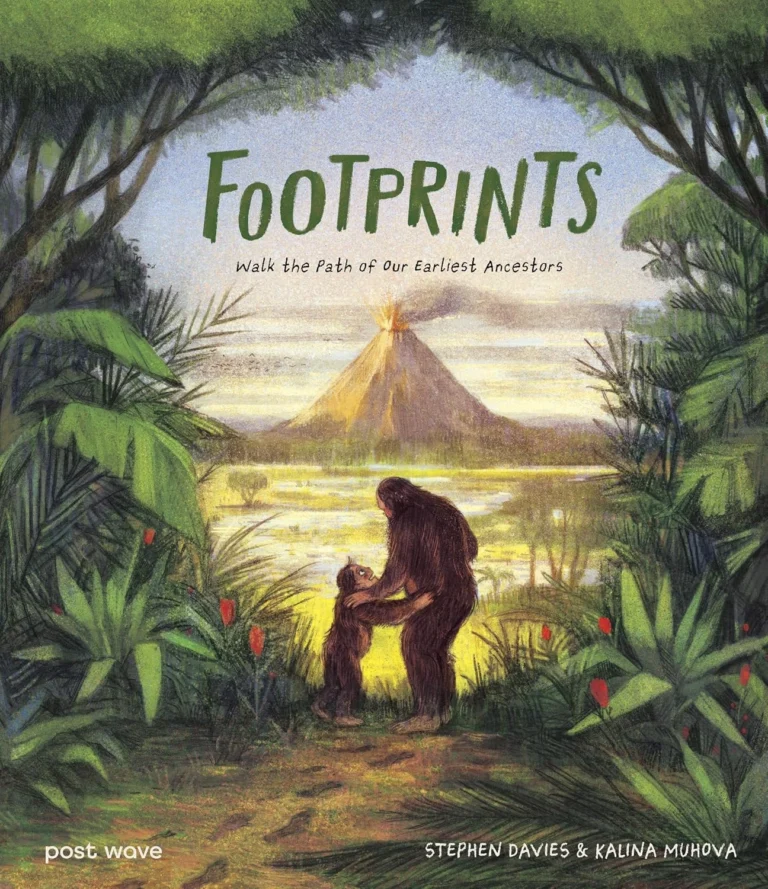
Footprints by Stephen Davies
Illustrated by Kalina Muhova
- Age Range: 7-11
- Publisher: Post Wave
- Format: Hardback
- Genre: narrative non-fiction
- ISBN: 978-1836270829
- Publication date: 17 September 2026
- Print length: 56 pages
- Dimensions: 24.5 x 0.9 x 28.5cm
- Curriculum Links: human origins, palaeontology, evolution and prehistory, science and discovery, Mary Leakey, women in STEM
Synopsis
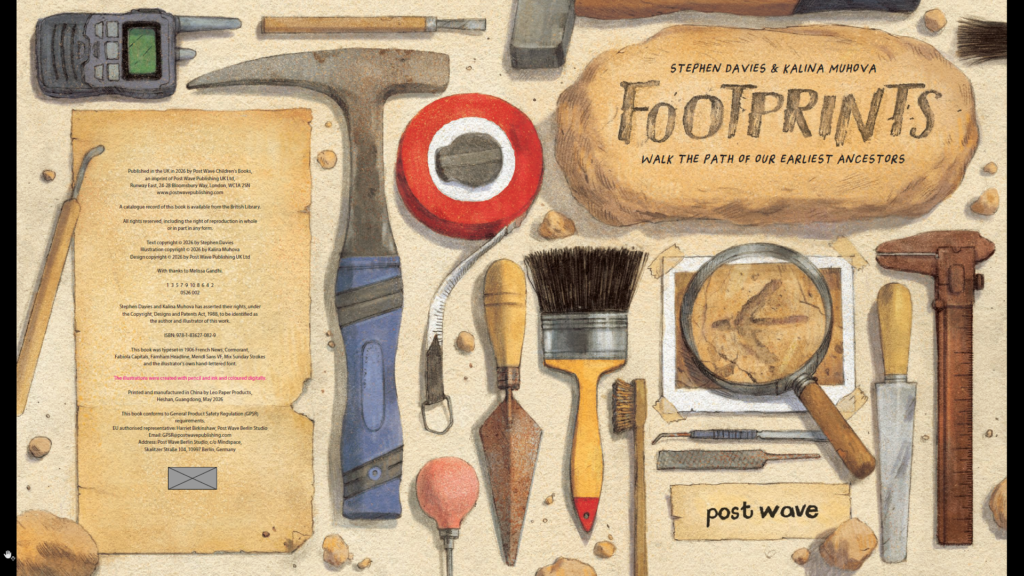
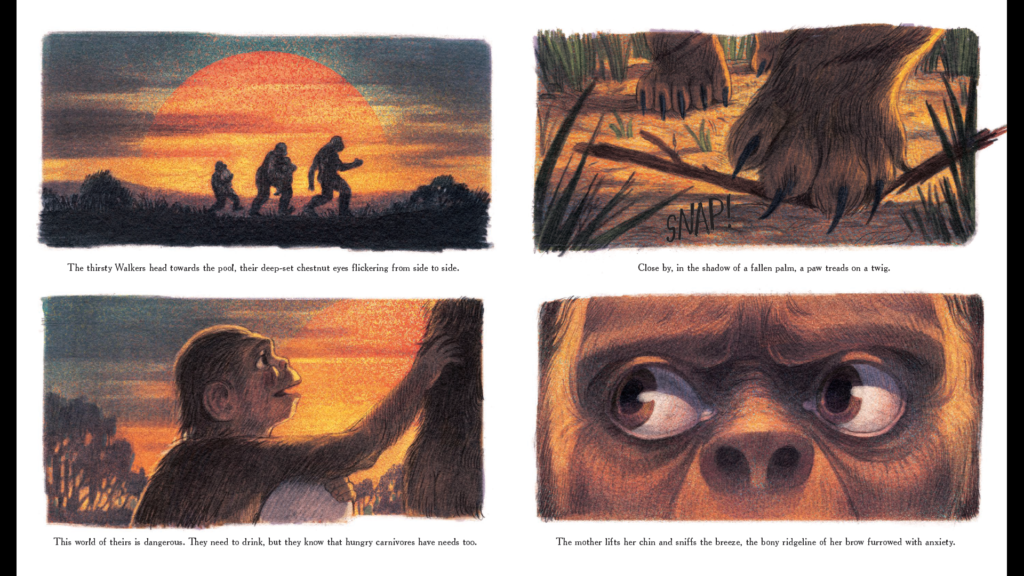
Footprints by Stephen Davies, illustrated by Kalina Muhova, is a narrative non-fiction book published by Post Wave, for children aged 7–11. It takes readers back 3.6 million years to explore the world of Australopithecus afarensis (Lucy), one of the earliest ancestors of modern humans.
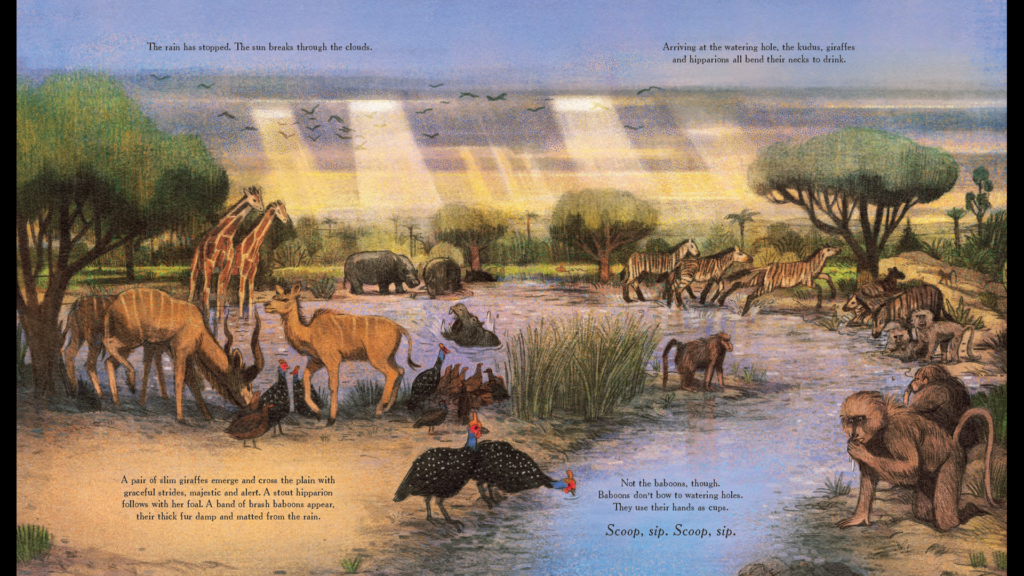
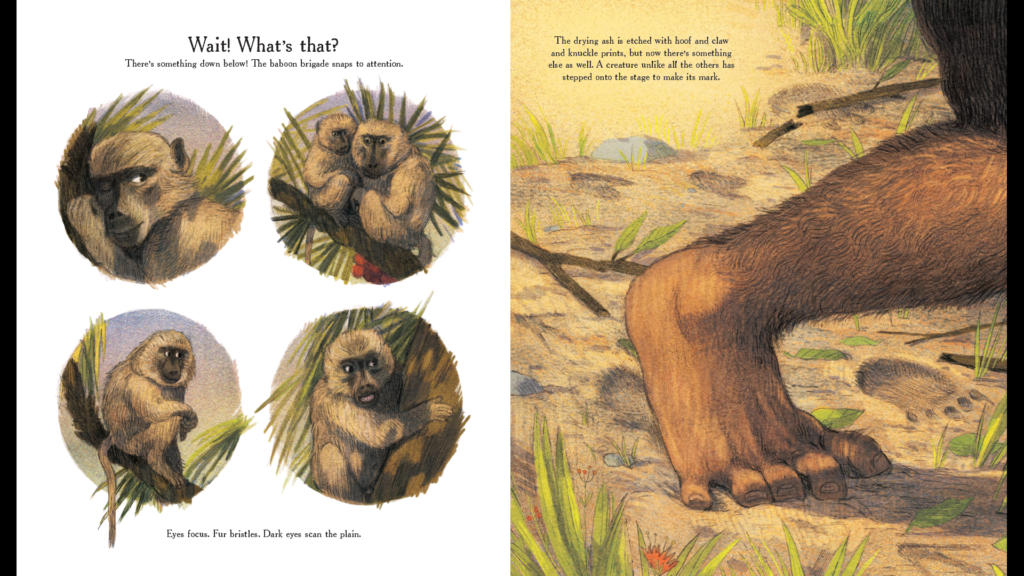
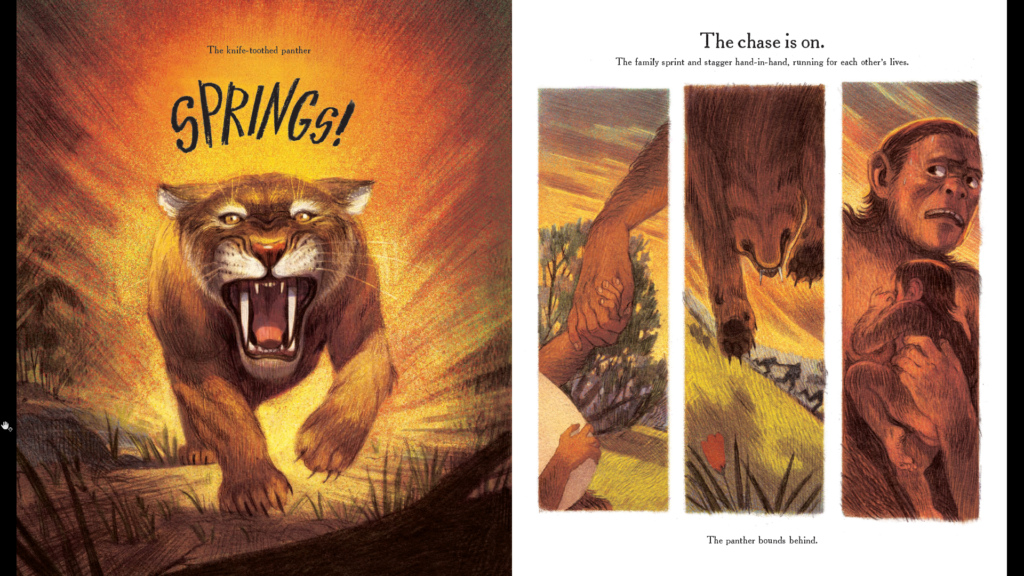
The book imagines Lucy’s world as she roams ancient landscapes with knife-toothed cats and towering giraffes, while navigating raging volcanoes and fierce storms.
Author’s note
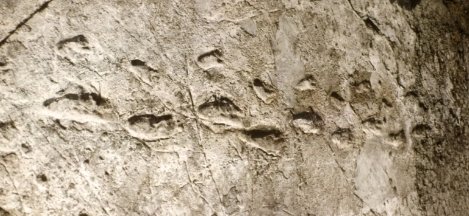
“My wonderful agent Julia Churchill gave me the idea for this book. She sent me a one-line email and a photo of the Laetoli footprints. The sight of those footprints was electrifying – here was evidence of early bipedal walking, literally set in stone!“
Reviews of Footprints by Stephen Davies
What a lovely book! I was transported to another place in another time, awestruck by volcanoes and terrified by bloodthirsty predators. A beautifully presented and enlightening book, Footprints mixes poetry and mesmerising images in answering one of humankind’s most important questions – how we came to be.

I read Footprints by Stephen Davies with delight and admiration. I love that this fascinating story features fun facts, ancient animals and perfectly judged moments of humour.

Davies’ lucid text offers a notably empathetic view of early hominids, while Muhova’s art is vibrant and clear, with effective touches of red.
A rich and engaging portrait of our earliest relatives.
Memorable and relatable
Using elegant, elevated language, the book transports readers back millions of years to a prehuman landscape in which danger could be found around every corner.

A fantastic work of narrative non-fiction
Footprints by Stephen Davies covers an incredible range of STEM subjects taught in British schools, including rocks, volcanoes, plate tectonics and evolution, bringing them together in a coherent narrative.

Related links
- I chatted about Footprints with teacher and author Ian Eagleton over at The Reading Realm
- The Laetoli footprints were discovered as a direct result of a game of elephant dung dodgeball! I wrote about it in this piece for First News
- Narrative non-fiction is an excellent way to enthuse children about STEM subjects. I discussed this in a piece for Booktrust and recommended five compelling narrative non-fiction reads
For Teachers
I offer Key Stage 2 workshops that use Footprints as the inspiration for children to write their own prehistoric chase scenes. In this session we have fun with words and smuggle in some tips on pace, tension, descriptive language and strong verbs.
See School Visits page for details.
Mary Leakey and the Discovery of the Laetoli Footprints
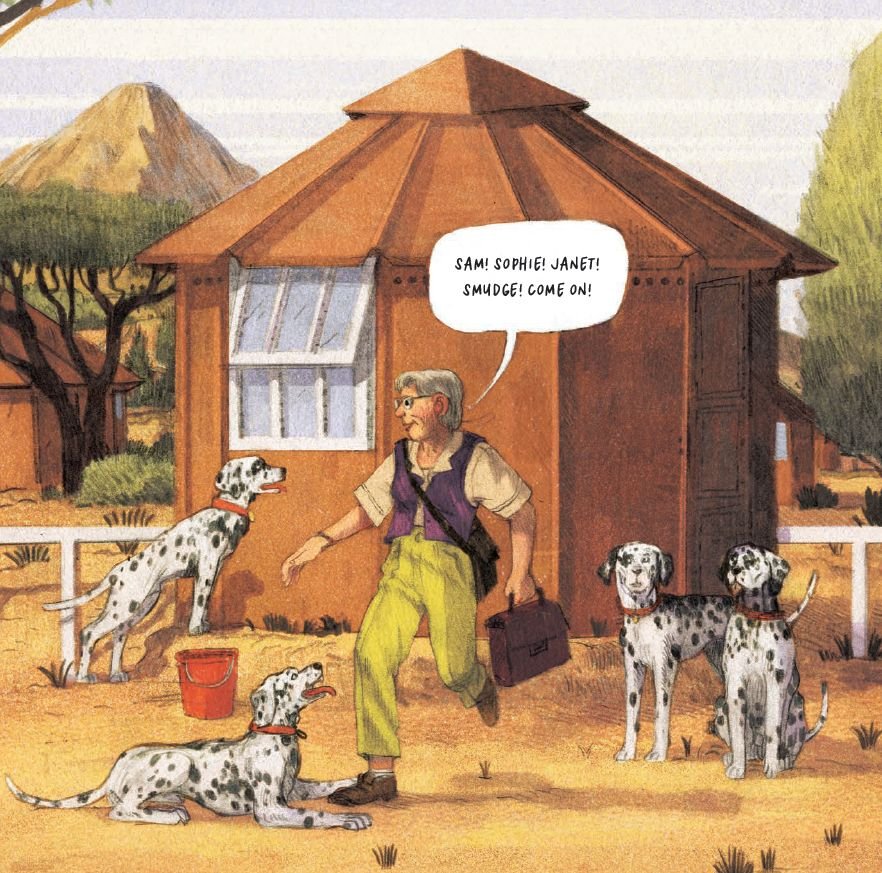
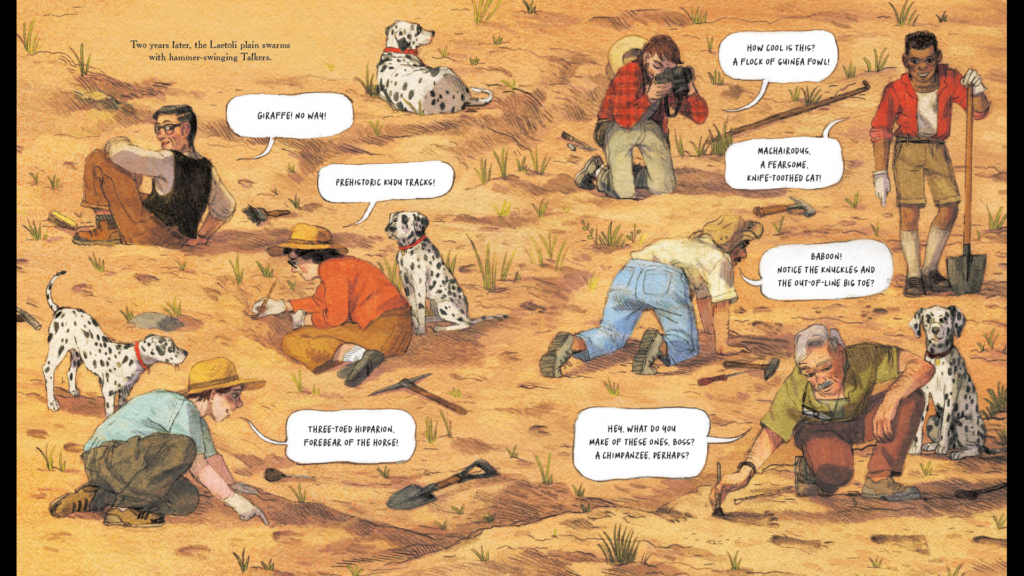
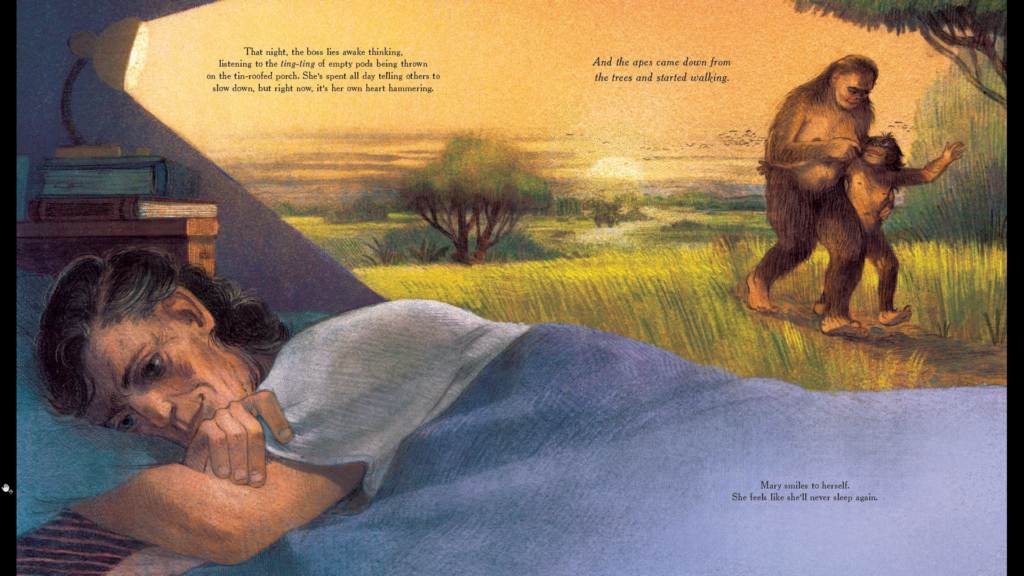
British fossil hunter Mary Leakey (1913 to 1996) led several expeditions to Laetoli in Tanzania, Africa.
One evening in 1976, three members of her team were messing around, throwing elephant dung at each other, when one of them spotted some animal prints in the volcanic rock right under his nose.
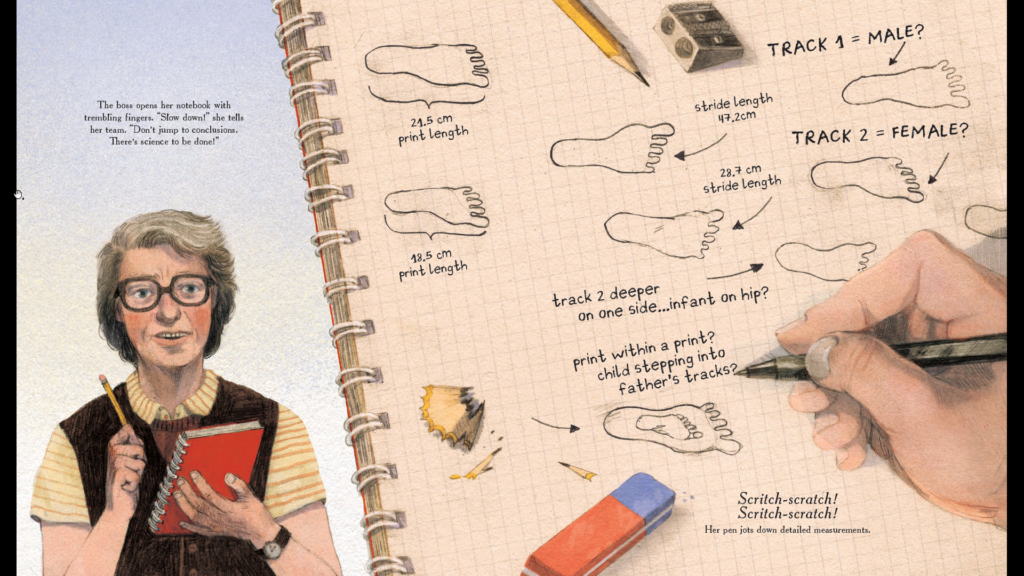
That was just the beginning. There turned out to be tens of thousands of prints, taking Mary and her team years to uncover and study. And in July 1978, they stumbled on their most exciting discovery yet: a set of footprints that looked more human than ape.
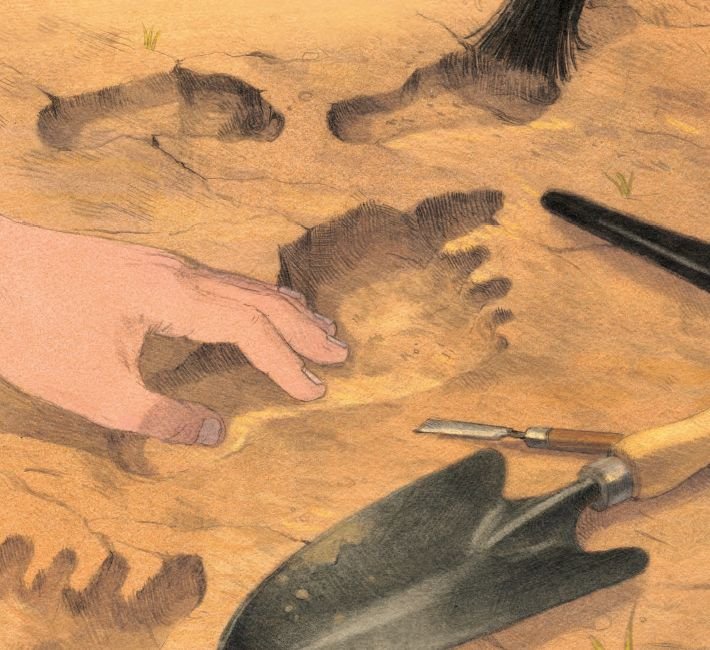
These footprints, scientists later agreed, were made between 3.6 and 3.8 million years ago, probably by a species called Australopithecus afarensis. The members of this species climbed like apes but walked upright on two legs.
The discovery was groundbreaking. It helped us piece together our human history, by proving that early human relatives walked upright much earlier than we previously thought they did. Walking upright on two legs was a major development in human evolution. The Laetoli footprints provided remarkable evidence that our early relatives were already doing this millions of years ago.
Sample Pages

Related Books
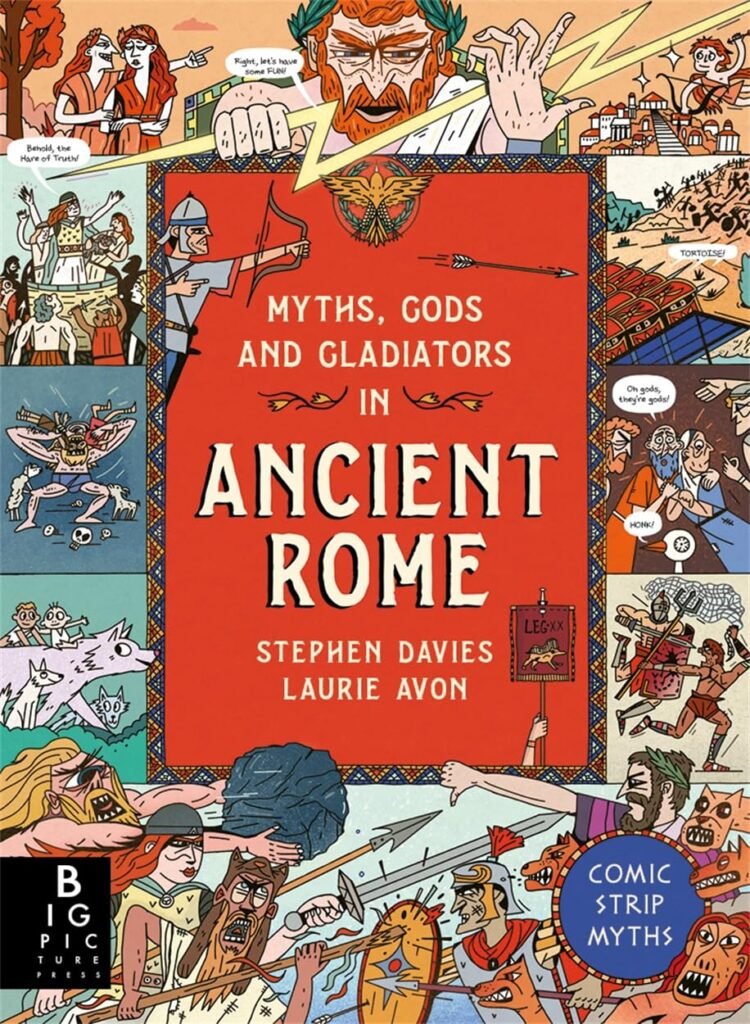
Myths, Gods and Gladiators in Ancient Rome
illustrated by Laurie Avon
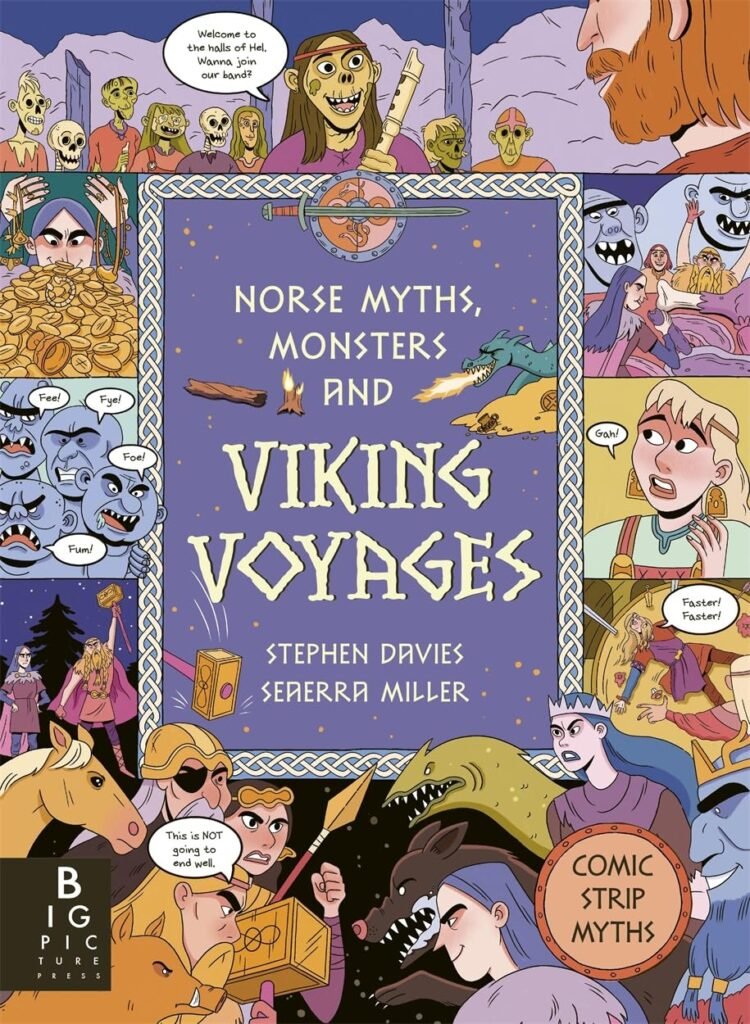
Norse Myths, Monsters and Viking Voyages
illustrated by Seaerra Miller